
How to Understand and Set Rental Criteria as a Landlord
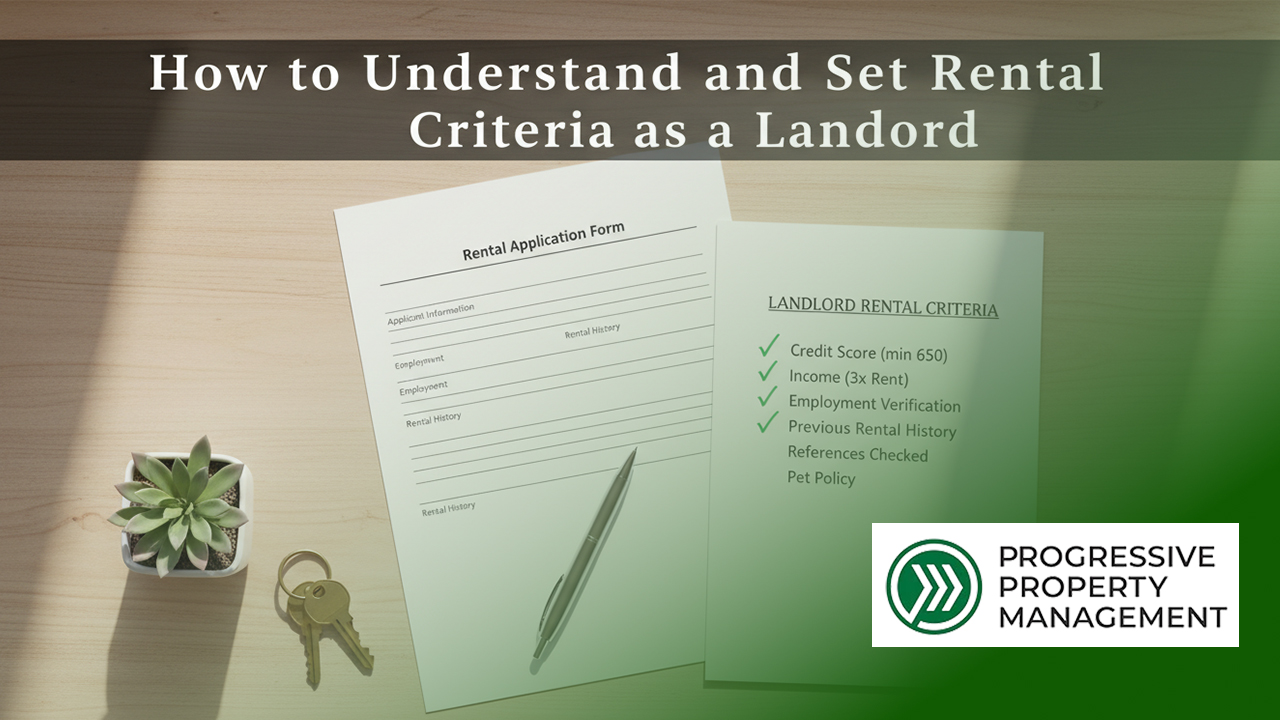
Setting minimum standards for your rental property, otherwise known as the rental criteria, is one of the first steps a landlord takes when renting out their property. Clear criteria help you limit the time wasted on non-qualified candidates, identify qualified tenants, avoid messy legal disputes, and create consistent results that provide less headache and more enjoyment in this process as a landlord.
This article explains what rental criteria are, why they matter, and how to establish those criteria.
What are Rental Criteria?
The simplest description of rental criteria are the standards tenants must meet to qualify for a rental property. These criteria fall under “black and white” ruling of being a clear Yes or No answer on whether they meet the threshold for the three qualifications of:
- Income
- Credit
- Rental History
Those are the big three qualifications, but there are other deciding criteria a landlord can disclose, albeit not as fully enforceable as the big three, such as:
- Move-in Date
- Pets
- Number of residents
Why Does Rental Criteria Matter?
Rental criteria matter as they remove subjectivity and ambiguity in the process of finding a tenant for your property – which can be deemed discriminatory should a denied tenant contest the action – and incur fair housing penalties and potential small claims court damages.
Just as important as protecting yourself and your actions from a legal standpoint, is the efficiency point as well. When you have clear standards to hold all applicants to, you remove confusion and replace it with a repeatable system for weighing, evaluating, and analyzing applications.
As a side benefit, having and disclosing your rental criteria also reduces the time invested in talking, vetting, and showing your rental property to unqualified candidates. You can instead divert your focus to the best candidates – quick follow-up, expanded review of their applications, and more throughout the experience for applicants to keep them engaged.
The Most Common Rental Criteria Landlords Use
As noted in the earlier section, there are multiple criteria a landlord can set, but we are going to focus on the big three that evaluate a tenant’s financial stability and rental liability, which is the single most important factor in renting to someone.
Income Requirement
Income is often the most important factor in evaluating a tenant’s ability to pay rent on time and in full, and for the foreseeable future.
The typical requirement is a multiple of rent to income, most commonly that is 3x gross/total income to rent. Meaning a rental that is $3,000 a month requires that the total income (pre tax income) be $9,000. If multiple adults who work are applying for the property, it is their combined income that must meet $9,000.
Our personal recommendation is to set a higher income requirement due to debt service, expenses, and taxes, which reduce available funds – so we recommend 3.5x income to rent.
Credit Requirement
Credit helps evaluate a tenant’s history of paying their financial obligations and is summarized in a credit score.
Most landlords actually view credit as a more important requirement than income, because qualified applicants will have a similar income range, but credit can vary much more depending on whether a car loan is paid off, medical debt, minimal credit usage, etc.
As such, most landlords require a minimum credit score of 600 but prefer a higher score of 650 or 700.
Our recommendation is a lower credit score, of 600 – 650, to allow more leeway for people who would otherwise be qualified and are great candidates, but may have limited credit history.
Rental History
Rental history is one of the strongest indicators of future performance as a tenant, as it showcases prior actions of paying rent on time and in full, and maintaining a good relationship with the prior landlord.
Rental history is also a bit more of a “grey” space, as you are limited in the questions you can ask a prior landlord, but we recommend these rental criteria that include:
- No, or minimal NSF payments (with a valid reason)
- No outstanding payment owed
- None, or minimal late fees (with a valid reason)
These will also be combined with the criteria of requiring no “Eviction on Record”, which would be found on the credit report.
California Legal Requirements for Setting and Sharing your Rental Criteria
Beyond the benefits you will receive by following and enforcing rental criteria, the state of California has made it clear that this is not an optional action and, in fact, a requirement through new legislation in 2026.
1st Requirement
California requires you to disclose your rental requirements to applicants before they apply for the property. Our recommendation is to put the rental criteria in your property’s listing description. Otherwise, you want to disclose these criteria when vetting interested parties, or when you tour the property with them.
2nd Requirement
Should you not disclose your rental criteria, you are required to refund or return any application fees you have collected from the applicants you deny. The stance is simple – if they did not know the criteria, they should be refunded as they wouldn’t have applied otherwise.
3rd Requirement
For any applications you have received, you are required to also provide a copy of the credit report to the applicants.
Best Practices with Rental Criteria
Determining and using your rental criteria is the first step in a series of steps to properly evaluate rental applications and safeguard yourself against adverse action.
Landlords should have a clear application document to weigh applicants and their information in a documented format.
Information from the application requires a thorough investigation, such as weighing income sources and understanding the credit score.
Yet when rental criteria are clearly defined and consistently applied, you create fewer disputes, more stable rental relationships, and a professional screening tool to protect yourself.